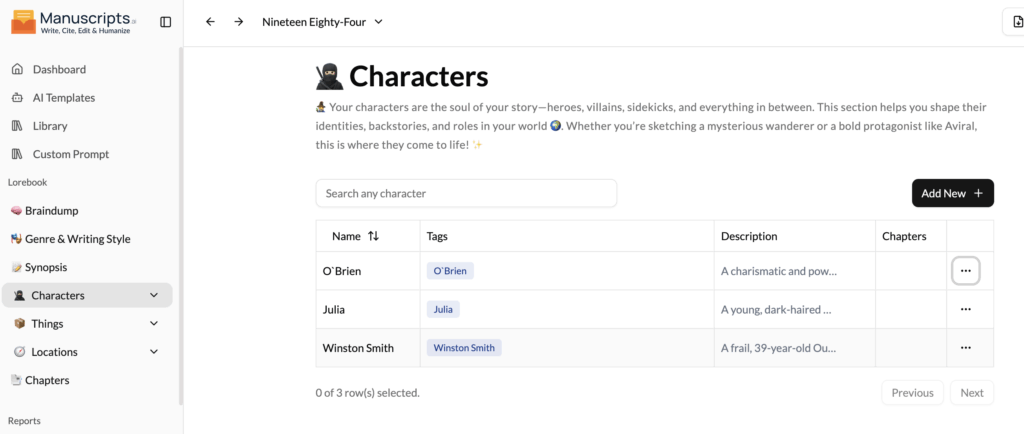
A story is more than its plot; it is the memorable characters, evocative locations, and unique objects that inhabit it. These are the elements that breathe life into a narrative and make a fictional world feel real and immersive. The Characters & Things section of the Lore Book is the heart of your world-building—a powerful, interconnected database designed to catalog and detail every important “noun” in your story.
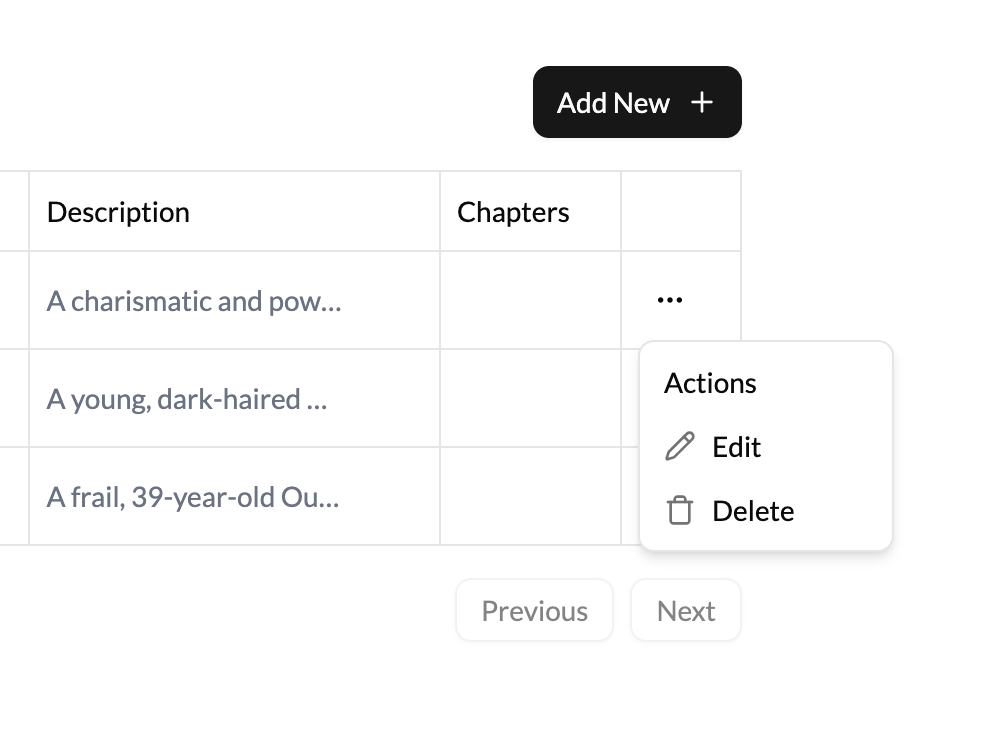
This is not just a static list of notes. Each entry you create becomes a rich, detailed data profile that the AI actively studies and references. When you define a character’s voice, you are teaching the AI how they speak. When you describe the history of a magical sword, you are giving the AI a piece of lore it can weave into the narrative. This section transforms your world’s elements from passive descriptions into active participants in the writing process.
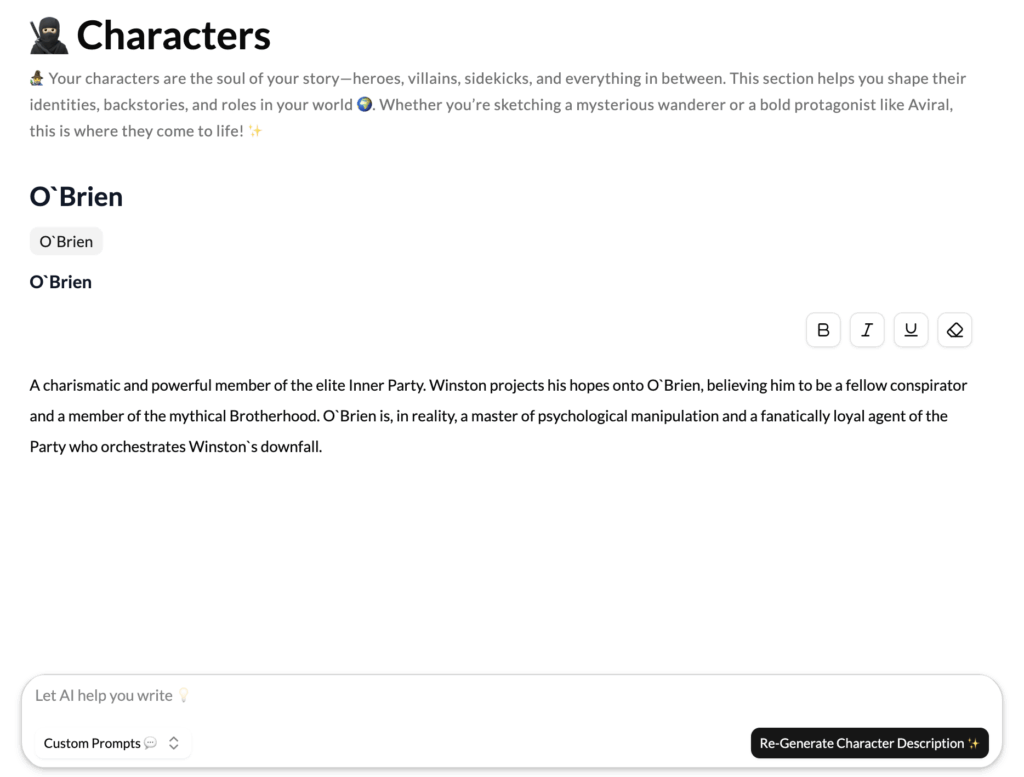
Characters: Crafting Believable Personas
Your characters are the engine of your story. This section allows you to go beyond superficial descriptions to create deep, consistent, and believable personas. For each major and minor character, you should create a dedicated entry.
Key Fields for a Character Profile:
- Name & Role: (e.g., “Kaelen Varis,” “Protagonist”)
- Backstory & Formative Events: Where do they come from? What key events shaped who they are today? A traumatic childhood, a military past, a lost love—these details inform their present actions.
- Motivations & Goals: What does this character want more than anything else (their external goal)? What is their deep-seated internal need (e.g., to feel safe, to earn respect)? Understanding their motivations is key to a compelling arc.
- Fears & Flaws: What are they afraid of? What are their weaknesses and inner conflicts? Flaws make characters relatable and create opportunities for tension and growth.
- Physical Appearance: Go beyond hair and eye color. How do they carry themselves? Do they have any distinguishing scars or tattoos? What is their typical style of dress?
- Voice & Mannerisms: How do they speak? Are they eloquent, sarcastic, terse, or rambling? Do they use slang or have a distinct accent? Do they have any nervous tics, like tapping their fingers or avoiding eye contact?
- Relationships: This is where the interconnected nature of the Lore Book shines. You can link a character’s profile to others and define the relationship (e.g., Mother of Lyra, Rival of Inquisitor Valerius, Mentor to Elara).
How the AI Uses This: When you write a scene and ask the AI to Write Kaelen’s reaction, it will consult this profile. If Kaelen’s flaw is “crippling self-doubt,” the AI will generate an internal monologue filled with uncertainty. If his voice is “sarcastic,” his dialogue will be witty and sharp.
Things: Building a Rich and Tangible World
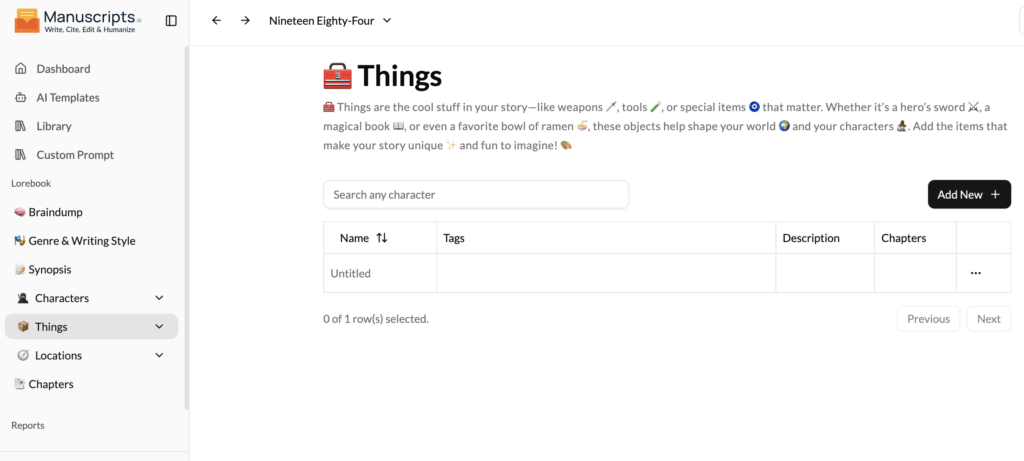
“Things” is the versatile, catch-all category for every other element that makes your world unique. This is your atlas, armory, bestiary, and encyclopedia, all in one. The more detail you add here, the more tangible and consistent your world will feel.
Examples of “Things” Entries:
- Locations: Create entries for The City of Silverwood, The Whispering Marshes, or The Black Iron Prison. Describe their atmosphere, key landmarks, history, inhabitants, and sensory details (smells, sounds).
- Items: Catalog important objects, both magical and mundane. The Sunstone Amulet (describe its appearance, powers, and origin), Captain Eva’s Starship, The Serenity (detail its class, capabilities, and history), or The Forged Will of the King (the central MacGuffin of a political thriller).
- Organizations & Factions: Detail the groups that shape your world. The Imperial Legion, The Circle of Magi, The Cyber-Corp Mega-Conglomerate. Describe their hierarchy, goals, ideology, and key members.
- Concepts & Lore: This is for the abstract rules and history of your world. Create entries for The Principles of Elemental Magic, The Great Cataclysm, The Prophecy of the Chosen One, or The FTL Drive’s Limitations. This is crucial for maintaining the internal logic of your story, especially in sci-fi and fantasy.
How the AI Uses This: When you write They arrived in Silverwood and ask the AI to describe the city, it will pull the details from your “Silverwood” entry, mentioning the “gleaming white towers” and the “sound of the silver-smiths’ hammers” that you defined. This ensures effortless consistency and adds incredible depth to your narrative with minimal effort during the drafting phase.